what were women in the 20s expected to do in the home
As we celebrate the centennial of the 19th Subpoena, giving women the right to vote, we should also celebrate the major strides women accept made in the labor marketplace. Their entry into paid work has been a major factor in America's prosperity over the past century and a quarter.

Despite this progress, testify suggests that many women remain unable to achieve their goals. The gap in earnings betwixt women and men, although smaller than it was years ago, is still significant; women continue to be underrepresented in certain industries and occupations; and also many women struggle to combine aspirations for work and family. Further advancement has been hampered by barriers to equal opportunity and workplace rules and norms that neglect to back up a reasonable work-life balance. If these obstacles persist, we will squander the potential of many of our citizens and incur a substantial loss to the productive capacity of our economic system at a fourth dimension when the aging of the population and weak productivity growth are already weighing on economical growth.
A historical perspective on women in the labor force
In the early 20th century, nigh women in the U.s.a. did non work outside the dwelling house, and those who did were primarily immature and unmarried. In that era, just 20 percent of all women were "gainful workers," as the Census Bureau and so categorized labor force participation outside the home, and simply v percent of those married were categorized as such. Of form, these statistics somewhat understate the contributions of married women to the economy beyond housekeeping and childrearing, since women's work in the home oft included piece of work in family businesses and the dwelling production of goods, such equally agricultural products, for sale. Besides, the aggregate statistics obscure the differential experience of women by race. African American women were well-nigh twice every bit probable to participate in the labor force as were white women at the time, largely because they were more than probable to remain in the labor force later on wedlock.
If these obstacles persist, we will squander the potential of many of our citizens and incur a substantial loss to the productive capacity of our economy at a fourth dimension when the aging of the population and weak productivity growth are already weighing on economic growth.
The fact that many women left work upon marriage reflected cultural norms, the nature of the piece of work available to them, and legal strictures. The occupational choices of those young women who did piece of work were severely circumscribed. Almost women lacked significant instruction—and women with footling education mostly toiled every bit piece workers in factories or as domestic workers, jobs that were dirty and oftentimes unsafe. Educated women were deficient. Fewer than 2 pct of all 18- to 24-yr-olds were enrolled in an institution of college education, and just ane-tertiary of those were women. Such women did non accept to perform transmission labor, simply their choices were likewise constrained.
Despite the widespread sentiment against women, particularly married women, working outside the home and with the limited opportunities available to them, women did enter the labor force in greater numbers over this period, with participation rates reaching nearly 50 percent for single women by 1930 and nearly 12 percentage for married women. This rise suggests that while the incentive—and in many cases the imperative—remained for women to drib out of the labor market at wedlock when they could rely on their husband's income, mores were irresolute. Indeed, these years overlapped with the so-called first wave of the women'due south movement, when women came together to agitate for change on a variety of social issues, including suffrage and temperance, and which culminated in the ratification of the 19th Amendment in 1920 guaranteeing women the right to vote.
Between the 1930s and mid-1970s, women'south participation in the economy continued to rise, with the gains primarily owing to an increase in work among married women. By 1970, l percent of single women and 40 per centum of married women were participating in the labor forcefulness. Several factors contributed to this ascent. Showtime, with the advent of mass high school education, graduation rates rose substantially. At the same fourth dimension, new technologies contributed to an increased need for clerical workers, and these jobs were increasingly taken on by women. Moreover, because these jobs tended to be cleaner and safer, the stigma attached to work for a married adult female diminished. And while there were still marriage bars that forced women out of the labor force, these formal barriers were gradually removed over the menses post-obit World War Two.
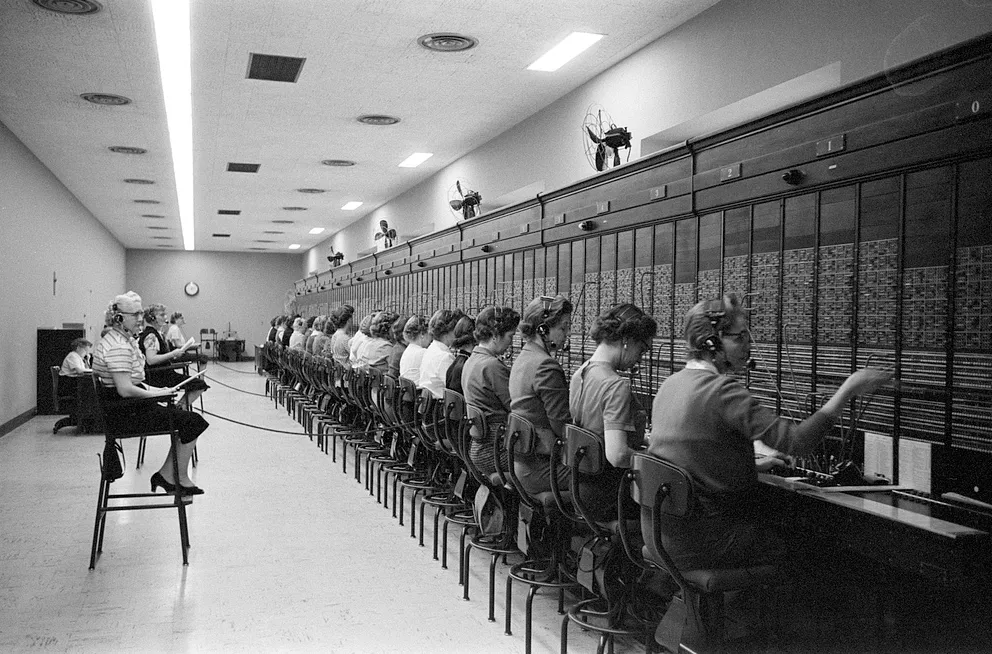
Over the decades from 1930 to 1970, increasing opportunities also arose for highly educated women. That said, early on in that period, most women still expected to have short careers, and women were notwithstanding largely viewed as secondary earners whose husbands' careers came first.
Every bit time progressed, attitudes about women working and their employment prospects changed. As women gained experience in the labor strength, they increasingly saw that they could balance work and family. A new model of the two-income family unit emerged. Some women began to attend college and graduate school with the expectation of working, whether or not they planned to marry and take families.
By the 1970s, a dramatic alter in women's work lives was under fashion. In the period after World State of war II, many women had not expected that they would spend as much of their developed lives working as turned out to exist the instance. By contrast, in the 1970s young women more ordinarily expected that they would spend a substantial portion of their lives in the labor force, and they prepared for it, increasing their educational attainment and taking courses and college majors that better equipped them for careers as opposed to just jobs.
These changes in attitudes and expectations were supported by other changes nether way in society. Workplace protections were enhanced through the passage of the Pregnancy Discrimination Human action in 1978 and the recognition of sexual harassment in the workplace. Access to birth control increased, which allowed married couples greater control over the size of their families and young women the ability to delay marriage and to programme children around their educational and work choices. And in 1974, women gained, for the first time, the right to utilize for credit in their own name without a male co-signer.
By the early 1990s, the labor force participation rate of prime working-historic period women—those between the ages of 25 and 54—reached just over 74 percent, compared with roughly 93 percent for prime working-age men. By so, the share of women going into the traditional fields of education, nursing, social work, and clerical work declined, and more women were condign doctors, lawyers, managers, and professors. Every bit women increased their education and joined industries and occupations formerly dominated past men, the gap in earnings between women and men began to close significantly.
Remaining challenges and some possible solutions
We, every bit a land, have reaped great benefits from the increasing office that women have played in the economy. Simply evidence suggests that barriers to women'southward connected progress remain. The participation rate for prime working-age women peaked in the belatedly 1990s and currently stands at almost 76 percent. Of course, women, particularly those with lower levels of pedagogy, have been afflicted past the same economic forces that have been pushing down participation among men, including technical change and globalization. Nonetheless, women'due south participation plateaued at a level well below that of prime working-age men, which stands at about 89 percentage. While some married women cull non to work, the size of this disparity should lead us to examine the extent to which structural problems, such as a lack of equal opportunity and challenges to combining work and family, are belongings back women's advancement.
Recent inquiry has shown that although women now enter professional person schools in numbers nearly equal to men, they are still substantially less likely to reach the highest echelons of their professions.
The gap in earnings betwixt men and women has narrowed substantially, but progress has slowed lately, and women working full time withal earn about 17 percent less than men, on average, each week. Even when we compare men and women in the same or similar occupations who appear virtually identical in background and experience, a gap of about 10 percent typically remains. As such, nosotros cannot rule out that gender-related impediments hold back women, including outright discrimination, attitudes that reduce women's success in the workplace, and an absence of mentors.
Recent research has shown that although women now enter professional schools in numbers nearly equal to men, they are however substantially less probable to reach the highest echelons of their professions. Even in my own field of economic science, women institute simply about ane-3rd of Ph.D. recipients, a number that has barely budged in ii decades. This lack of success in climbing the professional person ladder would seem to explain why the wage gap actually remains largest for those at the top of the earnings distribution.
One of the primary factors contributing to the failure of these highly skilled women to reach the tops of their professions and earn equal pay is that top jobs in fields such as law and business organisation require longer workweeks and penalize taking time off. This would have a disproportionately large effect on women who keep to bear the lion's share of domestic and kid-rearing responsibilities.
But information technology can be difficult for women to come across the demands in these fields in one case they have children. The very fact that these types of jobs require such long hours probable discourages some women—too as men—from pursuing these career tracks. Advances in engineering science accept facilitated greater piece of work-sharing and flexibility in scheduling, and in that location are further opportunities in this direction. Economic models also suggest that while it can be hard for whatever one employer to move to a model with shorter hours, if many firms were to modify their model, they and their workers could all be meliorate off.
Of course, most women are non employed in fields that require such long hours or that impose such severe penalties for taking time off. Only the difficulty of balancing work and family is a widespread problem. In fact, the recent trend in many occupations is to demand complete scheduling flexibility, which can result in too few hours of work for those with family unit demands and tin brand information technology difficult to schedule childcare. Reforms that encourage companies to provide some predictability in schedules, cross-railroad train workers to perform dissimilar tasks, or require a minimum guaranteed number of hours in commutation for flexibility could ameliorate the lives of workers holding such jobs. Another problem is that in virtually states, childcare is affordable for fewer than half of all families. And just five percent of workers with wages in the bottom quarter of the wage distribution have jobs that provide them with paid family leave. This circumstance puts many women in the position of having to choose betwixt caring for a sick family member and keeping their jobs.
This possibility should inform our own thinking about policies to make it easier for women and men to combine their family unit and career aspirations. For instance, improving access to affordable and expert quality childcare would appear to fit the bill, equally it has been shown to support total-time employment. Recently, there also seems to be some momentum for providing families with paid leave at the time of childbirth. The feel in Europe suggests picking policies that do non narrowly target childbirth, just instead tin can exist used to run into a variety of health and caregiving responsibilities.
Conclusion
The United States faces a number of longer-term economic challenges, including the aging of the population and the low growth rate of productivity. 1 recent study estimates that increasing the female participation rate to that of men would raise our gross domestic product past 5 percent. Our workplaces and families, as well equally women themselves, would benefit from continued progress. However, a number of factors appear to be belongings women back, including the difficulty women currently accept in trying to combine their careers with other aspects of their lives, including caregiving. In looking to solutions, we should consider improvements to piece of work environments and policies that do good non simply women, but all workers. Pursuing such a strategy would be in keeping with the story of the ascension in women's involvement in the workforce, which has contributed not only to their own well-existence but more broadly to the welfare and prosperity of our state.
This essay is a revised version of a speech that Janet Yellen, then chair of the Federal Reserve, delivered on May five, 2017 at the "125 Years of Women at Brown Conference," sponsored by Dark-brown University in Providence, Rhode Island. Yellen would like to thank Stephanie Aaronson, now vice president and director of Economic Studies at the Brookings Institution, for her assistance in the preparation of the original remarks. Read the full text of the spoken communication here »
About the Writer

snodgrassdiffe1947.blogspot.com
Source: https://www.brookings.edu/essay/the-history-of-womens-work-and-wages-and-how-it-has-created-success-for-us-all/
Belum ada Komentar untuk "what were women in the 20s expected to do in the home"
Posting Komentar